Texas Gulf Coast LNG Corridor
Category
Service Areas
Service Area
Communities across Texas
Next Step
Request a Project Review
Category
Service Areas
Service Area
Communities across Texas
Next Step
Request a Project Review
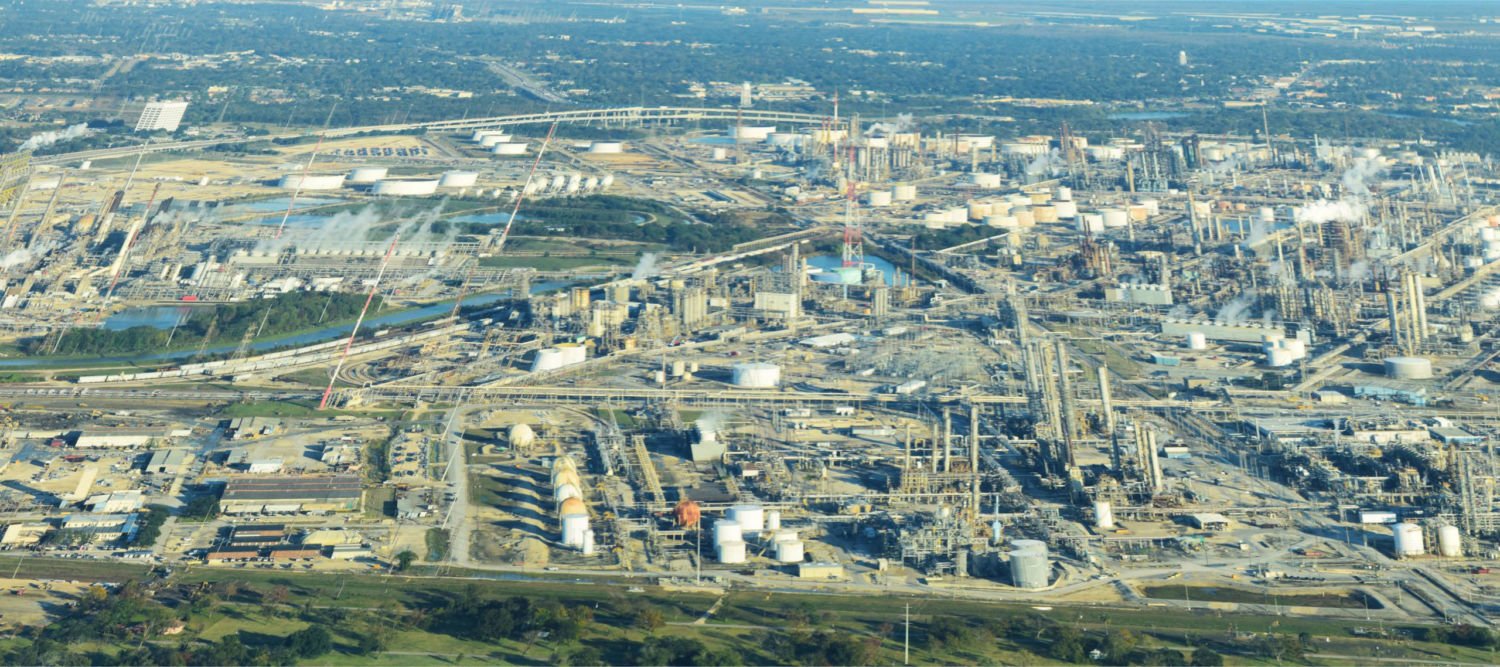
Staging buildings for LNG trains are built to be filled early and emptied on a date. Between the day a project reaches a final investment decision and the day its first train produces, a procurement chain moves pipe, valves, instruments, cable, modules and consumables through laydown yards and warehouses on the Texas coast. We design and build the warehouses, shops and receiving buildings on that chain along the Jefferson, Brazoria and Nueces county shoreline, with slabs, docks and yards sized for heavy and bulky freight.
The corridor is active now. The U.S. Energy Information Administration reported on April 23, 2026 that Golden Pass LNG achieved first LNG production in March 2026 and shipped its first cargo on April 22, 2026, with three trains of 0.7 Bcf/d nominal capacity each, Train 2 expected in the second half of 2026 and Train 3 in the first half of 2027. Enerdata, reporting on April 1, 2026, described production starting from the first of three trains at the Golden Pass project in Sabine Pass. Other projects are earlier in the sequence, and their material is moving through storage now.
A warehouse built for that flow has to be ready before the equipment arrives and useful to someone after the construction crew leaves.
Our schedule for a project-support warehouse starts at the day the first truckload of material is due. From there we count back through the slab cure, the foundation, the permit and the design, and we tell the owner which decisions need to be made by which dates. If the date is fixed, we recommend a pre-engineered metal frame and a precast or cast-in-place slab, since they can be completed fastest.
The same approach applies to a turnaround or a plant restart. A warehouse expansion of an existing supply building can be quicker than a new structure, because the utilities and the yard are already in place. We evaluate expansion first when a client already has a site on the corridor.
The corridor includes projects at very different points. LNG Industry reported on September 24, 2025 that Sempra Infrastructure reached a final investment decision on Port Arthur LNG Phase 2, with commercial operations expected in 2030 for Train 3 and 2031 for Train 4. A Federal Register notice published July 1, 2025 states that the June 8, 2022 explosion took the Brazoria County Freeport LNG terminal offline and that, after Freeport LNG requested a 40-month extension to complete its Train 4 Project, the construction deadline moved to December 1, 2031.
In Nueces County, LNG Industry reported on June 25, 2025 that Cheniere made a positive final investment decision on Corpus Christi Midscale Trains 8 and 9, with full notice to proceed issued to Bechtel Energy and total site capacity expected to exceed 30 million tons per year later this decade. Staggered schedules like these keep demand for staging space spread over several years, which helps a warehouse owner keep buildings occupied as one project winds down and another ramps up.
The core building types are receiving warehouses with docks for flatbeds and trailers, covered storage for sensitive items such as instruments and electrical equipment, open laydown yards with compacted stone or concrete, and shops for fabrication and testing. Many include a small office for the owner's materials team and the contractor's receiving crew.
Climate-sensitive items, such as instrumentation, may need conditioned storage. For these, we apply the methods from our cold storage warehouse work to design insulated envelopes and mechanical systems that hold temperature and humidity. A warehouse that includes a conditioned room also needs backup power, so we coordinate the generator and transfer switch with the electrical design.
When a project ends, the buildings should find a second use. A receiving warehouse becomes a distribution building for a parts supplier, a shop becomes a service center and a yard becomes truck parking. That requires standard door sizes, floor loads that suit many users and utilities that can be extended or reduced. The distribution center format is often the best fit for reuse.
The owner of a staging building should also think about how the plants will operate afterward. LNG facilities need maintenance spares and contractor support for the life of the plant, and the supply chain for that work is a long-term tenant base for well-located warehouses, often served through third-party logistics providers. We plan for that by leaving room beside the first building for a second, extending the utility stubs, and keeping the yard section heavy enough to take a different tenant's trucks. A modest amount of extra concrete at the start is much cheaper than tearing out and replacing an undersized apron later, and it lets the owner offer the property to a broader group of tenants when the first one leaves.
The big lines are the slab and pavement, the structural frame, the dock and door packages and the utility connections. Where the yard is large, it can be the single largest line item. We recommend a pavement section by area: a heavy section where cranes and loaded trailers operate, and a lighter one for parking and light traffic.
Escalation is a real risk in a corridor with several large projects competing for contractors and materials. We quote with clear validity dates, lock in major items early and keep alternates ready. See also our Port Arthur, Freeport and Corpus Christi pages for the local specifics.
Tell us the project, the first delivery date and the material, and we will return a building concept and a schedule worked back from that date.
As early as the material schedule allows. A building that is ready a few months before the first delivery costs little in carrying cost, while a building that is late can force expensive offsite storage. We work back from the delivery date and tell you the decision deadlines.
If it is a conventional warehouse, it can be leased to another user. We avoid single-purpose features and keep the structure standard, so the building keeps its value.
Yes. We design insulated envelopes, mechanical systems and backup power for the storage of sensitive items. The cost depends on the temperature, humidity and area, and we price it as a separate zone.
They can. Freeport LNG's construction deadline for Train 4 has moved to December 2031, which is a reminder that project schedules change. We recommend a phased site plan so you add space as the schedule firms up.
The choice follows the project you are serving and the labor and road network. Jefferson, Brazoria and Nueces counties each have different site conditions, and we compare them for you.