Corpus Christi
Category
Service Areas
Service Area
Communities across Texas
Next Step
Request a Project Review
Category
Service Areas
Service Area
Communities across Texas
Next Step
Request a Project Review
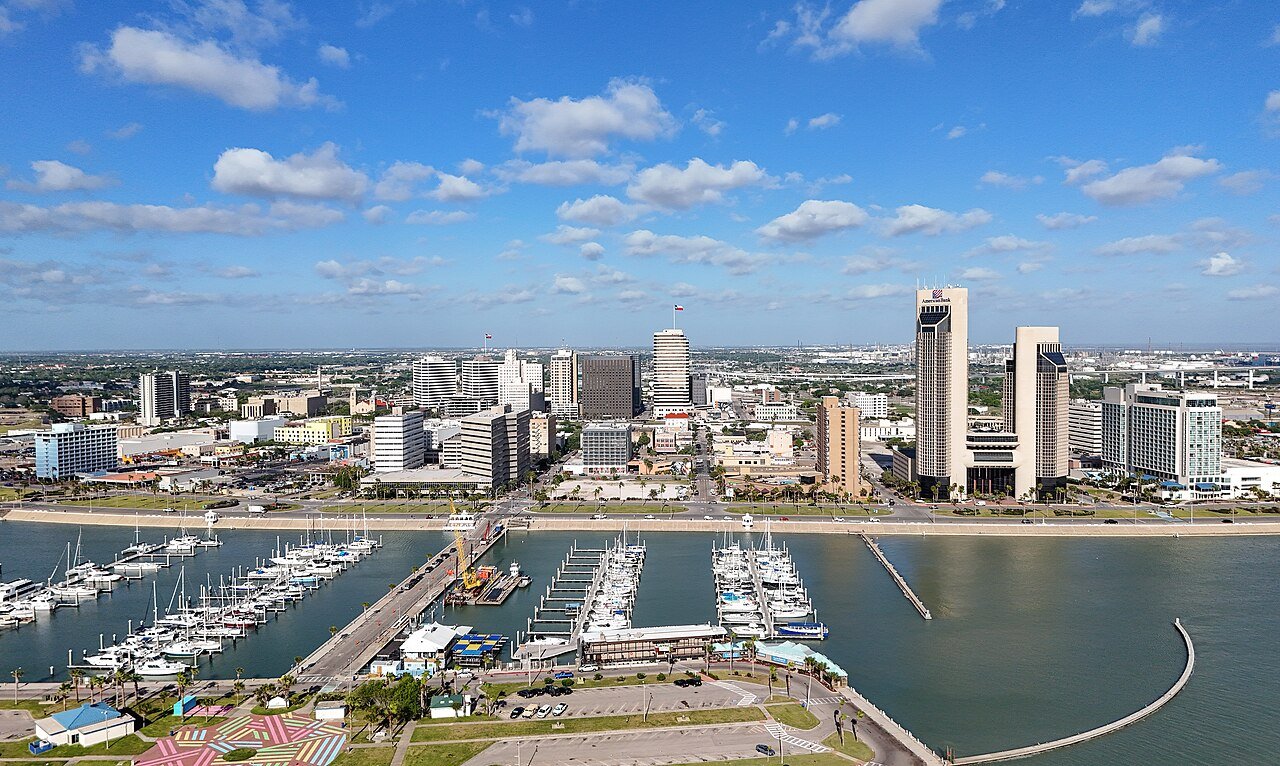
Deeper water changes what needs to be stored on land, and at Corpus Christi the water just got deeper. We build export-support warehouses, fabrication and equipment depots, aviation and vehicle parts storage and general distribution buildings around the ship channel and the bay, with the sitework, slabs and envelopes that the coastal environment demands.
The Port of Corpus Christi reported that it and its customers moved 203.4 million tons through the Corpus Christi Ship Channel in 2025, and that liquefied natural gas exports grew by 15.4 percent to 18.6 million tons. The port also marked the completion in 2025 of the Corpus Christi Ship Channel Improvement Project, which deepened the channel from 47 to 54 feet. For a warehouse developer, the lesson is that volumes of crude, LNG and other bulk commodities are large and increasingly export-oriented, and the support economy behind them is a mix of fabricators, equipment suppliers and service contractors who need covered storage and shop space more than they need rack-supported pallet space.
So the typical building here is not a classic e-commerce box. It is a tall, wide, heavy-slab building with overhead doors, an office and a yard.
LNG Industry reported on June 25, 2025 that Cheniere made a positive final investment decision on Corpus Christi Midscale Trains 8 and 9, two trains of over 3 million tons per year built next to Corpus Christi Stage 3, issued full notice to proceed to Bechtel Energy and expects the site to exceed 30 million tons per year later this decade. Construction of that scale drives demand for laydown, shop and warehouse space before the plant starts up.
The city's new Harbor Bridge, a $1.3 billion crossing with a 1,661-foot main span, opened its southbound lanes on June 28, 2025, with the northbound lanes scheduled for early July, according to the city. The Texas Comptroller's 2025 profile of Naval Air Station Corpus Christi lists 7,110 direct employees and calls the Corpus Christi Army Depot the largest industrial employer in South Texas. A depot-level maintenance base pulls parts, tooling and supplies through nearby warehouses, and the suppliers who serve it are a stable tenant group alongside the energy sector.
The most active customers are industrial contractors, equipment rental and sales companies, pipe and valve distributors, electrical and instrumentation suppliers and shipyard and marine service firms. Each wants a building that fits a truck-mounted crane, a bridge crane or a boom lift, so we plan the clear height and the door size around the largest piece of equipment they expect to bring inside.
Several fit our manufacturing distribution profile, since they receive materials, modify them and ship the finished item. Others are closer to building products distribution, with large items, heavy racks and outdoor stock. We also work with developers who build shells for this mix of tenants and lease them by the bay.
We schedule, supervise and inspect the trade partners who build the foundation, slab and structural frame, and we detail the envelope for salt air, wind-driven rain and heat. Fasteners and flashings are selected for corrosion resistance, roof systems are chosen for uplift ratings that match the local code, and the slab is cured and sealed to resist moisture migration. These items add cost compared with an inland building, but they extend the life of the shell.
The tilt-wall warehouse system suits tenants who want durable walls and fire resistance, while a pre-engineered frame suits those who want a long clear span for equipment. We bring the same discipline to both: cast or erect to tolerance, test the slab and document the work for the owner and the insurer.
Texas municipalities use the International Building Code, with local amendments by ordinance, and the state energy code remains the International Energy Conservation Code according to the State Energy Conservation Office. Coastal parcels also bring wind-region and flood-zone requirements that the local building official administers. We ask for the official's determination on the design wind speed and flood elevation at the start, because they affect the structure and the floor height.
If a project involves a parcel next to the channel, easements and setbacks from port and pipeline owners often matter more than the zoning. We order a current survey and title commitment and review them with the client before design begins.
Large energy projects compete for crane operators, concrete finishers and steel erectors. We reserve our trades early, break the project into packages and place long-lead orders at signing. Storm season adds risk between summer and autumn, so we aim to get the envelope closed before then where we can.
For clients who need a faster path, we compare a conventional build with a phased shell and a tenant fit-out later. Our Victoria and San Antonio pages show how the same program looks in inland markets, and the build-to-suit warehouse process explains how we manage design and cost with a named tenant.
Tell us the largest unit you will bring indoors, the yard you need and the date you must open, and we will return a building concept and a schedule.
Commonly 24 to 36 feet, with the exact number driven by the largest crane or equipment the tenant plans to use indoors. We confirm the equipment list before we set the eave height, since changing height after design is expensive.
Yes, but sites near the channel may have port or pipeline easements and special flood or wind rules. We start with the survey and title and ask the city for its requirements before purchase, then design to the strictest condition.
By choosing coatings, fasteners and flashings rated for the environment, detailing the roof and walls to shed water and specifying concrete mixes and sealers that resist chlorides. Maintenance still matters, so we provide a care schedule for the owner.
If the need lasts only a few years, leasing existing space is usually cheaper. If the need is long term or the market is short of buildings, building a conventional warehouse that can be re-leased protects the investment.
Yes. Heavy equipment yards need a pavement section designed for the loads and drainage that sends water away from the building. We design and build the yard with the building so the two work together.