Eagle Pass and Del Rio
Category
Service Areas
Service Area
Communities across Texas
Next Step
Request a Project Review
Category
Service Areas
Service Area
Communities across Texas
Next Step
Request a Project Review
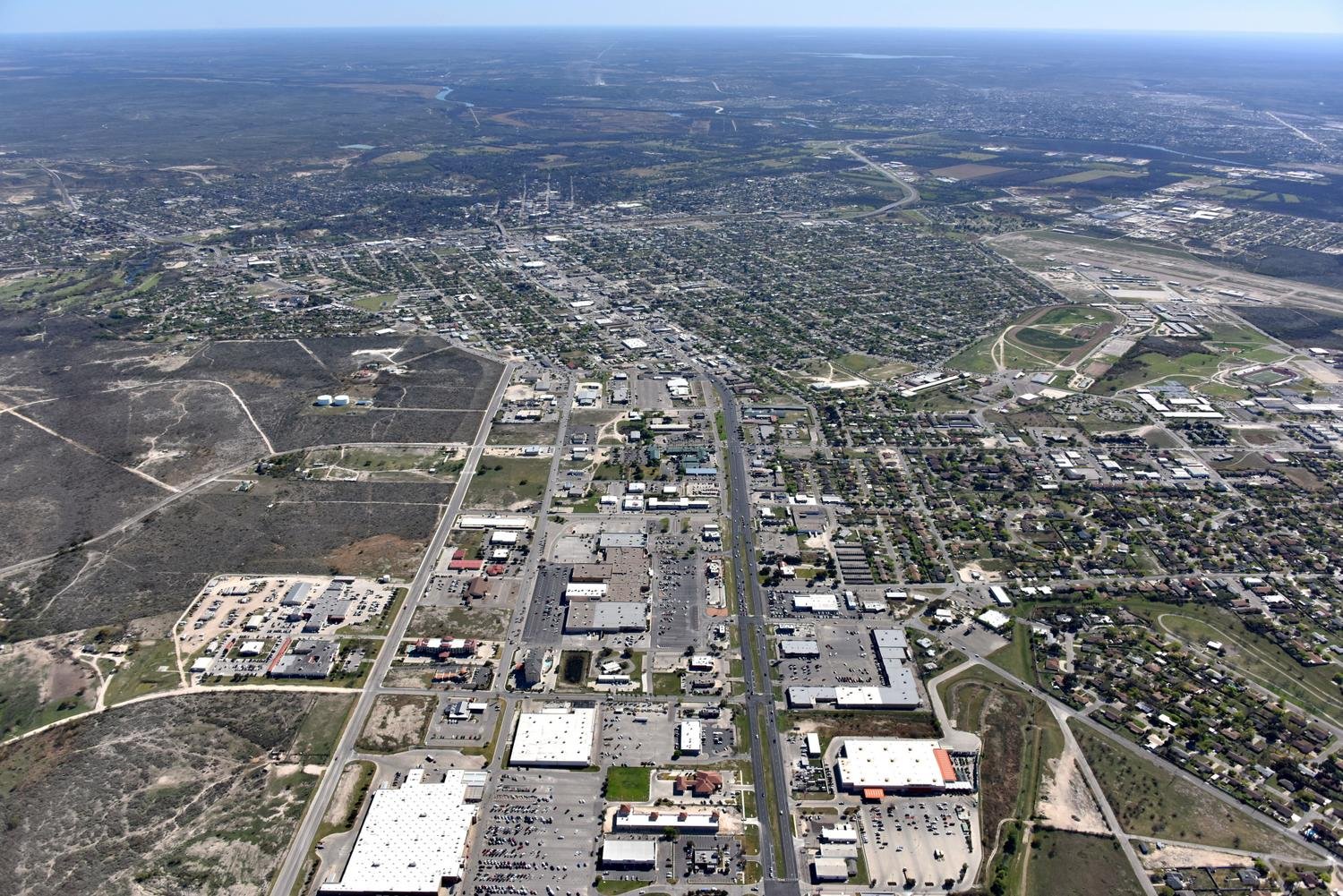
When the road, the water line and the power are still being extended, the builder's first deliverable is a site, not a building. In Eagle Pass and Del Rio we build warehouse and truck-oriented industrial space on land where infrastructure has to be proven before the first slab is poured: utility extensions, access roads, detention and fill, then the shell. That is a different job from dropping a building into an established park, and we price and schedule it that way. Our site utilities package is the scope that does it.
Realty News Report said in February 2025 that the 1,761-acre industrial park in Eagle Pass has Rio Grande frontage, seven warehouse land parcels under contract, a 136,000 square foot speculative warehouse expected within months and a 10-acre truck stop sale fronting El Indio Highway. A May 2026 FreightWaves article citing WorldCity data said the city handled $3.77 billion in trade in March 2026, down 9.23 percent year over year, and was the nation's 10th-largest border crossing by trade volume that month. A park of that size, with trade at that level, needs warehouses, truck yards and service space.
Del Rio, in Val Verde County, has a different base, and we treat it as its own market rather than an extension of Eagle Pass. Wikipedia describes Laughlin Air Force Base as the largest pilot-training base in the Air Force and the area's largest employer, so supply and service buildings serve a stable local market.
On undeveloped land the unknowns are bigger. How far is the nearest water main? Is there enough sewer capacity or does the site need a septic or package plant? Where does the electric feed come from, and what is the transformer lead time? We ask these questions first and put answers into a feasibility memo with ranges. That memo is useful even if you do not hire us, because it decides whether the parcel is worth buying.
Frontage on the Rio Grande also brings floodplain and setback questions. Building near the river means checking the mapped flood hazard, any federal or international boundary requirements and the elevation of the finished floor. We lay out the building and the truck court to keep clear of those constraints, and we show the owner where the buildable area really is.
A 136,000 square foot speculative warehouse is a good midpoint building: big enough for a regional distribution user and small enough to lease quickly. We build that product in tilt-wall with 28 to 32 foot clear heights, a dock count that supports several tenants, and a truck court with space for trailers. Our spec warehouse shells hold back the tenant finish to cut carrying cost.
The truck stop and truck-yard side of the market asks for something else: heavy pavement, fuel and wash facilities, drive lanes and drainage. We build concrete pavement for yards because trucks queuing and idling in heat quickly damage asphalt. Parking positions, lighting and security are specified with the operator.
Texas Public Radio reported in July 2026 that a proposed trade crossing near Eagle Pass in Maverick County would have one span for trucks and one for trains, that the county said it would buy up to 65 percent of the developer's stake, and that the developer expected groundbreaking by year end. The report also described a local dispute over the plan. That is the kind of project that could change land values and truck flow, and it is also one that may or may not be built on the stated timetable.
Our advice to a land buyer is to value the parcel on today's access and treat the crossing as upside. We design buildings that work with the roads that exist, and we leave room on the site for changes in truck entry if the crossing moves forward. If you are comparing the border markets, Laredo offers a mature crossing and El Paso a western one.
The Eagle Pass side is mostly about logistics and 3PL operations, trucking firms and manufacturers who need staging near the crossing. Del Rio's base supports local suppliers, maintenance firms and regional distributors. Between them, the demand is for mixed buildings: warehouse, shop, office and yard.
Mixed use means a building with a shop bay, a few docks and drive-in doors. We frame it as a metal building with an insulated office and a concrete floor sized for forklifts and trucks, and then add features such as overhead cranes or heavy slabs when a tenant needs them.
Remote markets pay for distance: crews, equipment and materials travel farther. Ready-mix delivery time limits how far a plant can serve a pour, and panel casting needs concrete to arrive in time and in spec. We locate a supplier early and plan pour days around its capacity. When the supplier is far away, we may recommend a temporary batch plant or adjusted mixes.
Labor is another factor, and a remote job can lose weeks if crews cannot be housed or fed. We bring a core team and hire locally where qualified, and we plan for housing and per-diem in the budget where the job needs it. Showing these as separate lines lets an owner decide which to trade off.
The critical path on raw land is not the building. It is the longest utility or permit item. We start those first and pour the slab only when the pad is accepted and the electrical service date is credible. If power lags, a building without service cannot be occupied, so we may recommend a temporary generator or a phased energization.
A well-sequenced project overlaps work: grading and utilities in the front of the site while panels are cast in the back, and fit-out of the first tenant while the next building's pad is prepared. Our warehouse teams maintain a look-ahead that identifies the items that could slip.
Send the parcel and the use you have in mind. We will return a feasibility memo covering utilities, floodplain and a budget range.
It is safer to find out first. We offer a feasibility review that lists utility distances, capacity, floodplain status and rough extension costs, so you can price the land with the real cost of getting it ready.
For heavy trucks standing in heat, concrete usually performs better and costs less to maintain, though it costs more up front. Asphalt can work in lightly loaded areas. We price both.
Plan on the roads that exist today. We design the site so the building and truck court work now and can adapt if routes change.
Yes. The two markets are different, but the approach to remote sites is similar: confirm infrastructure early, plan for logistics and phase the work.
We identify the supplier during preconstruction, confirm capacity and travel time, and schedule pours accordingly. If necessary, we adjust mix designs or bring in a temporary batch plant.