Southern Dallas Inland Port
Category
Service Areas
Service Area
Communities across Texas
Next Step
Request a Project Review
Category
Service Areas
Service Area
Communities across Texas
Next Step
Request a Project Review
Buildings near the Union Pacific Dallas Intermodal Terminal are won or lost on how fast a container becomes an outbound truck, and our southern Dallas County work is organized around that turn. The terminal lies partly in Wilmer and partly in Hutchins. Wilmer is on Interstate 45 and advertises easy access to I-45, I-20 and I-30, about 14 miles south of downtown Dallas. Interstates 20 and 45 pass through Hutchins, about 9 miles south of downtown, where many of the businesses are industrial or manufacturing related.
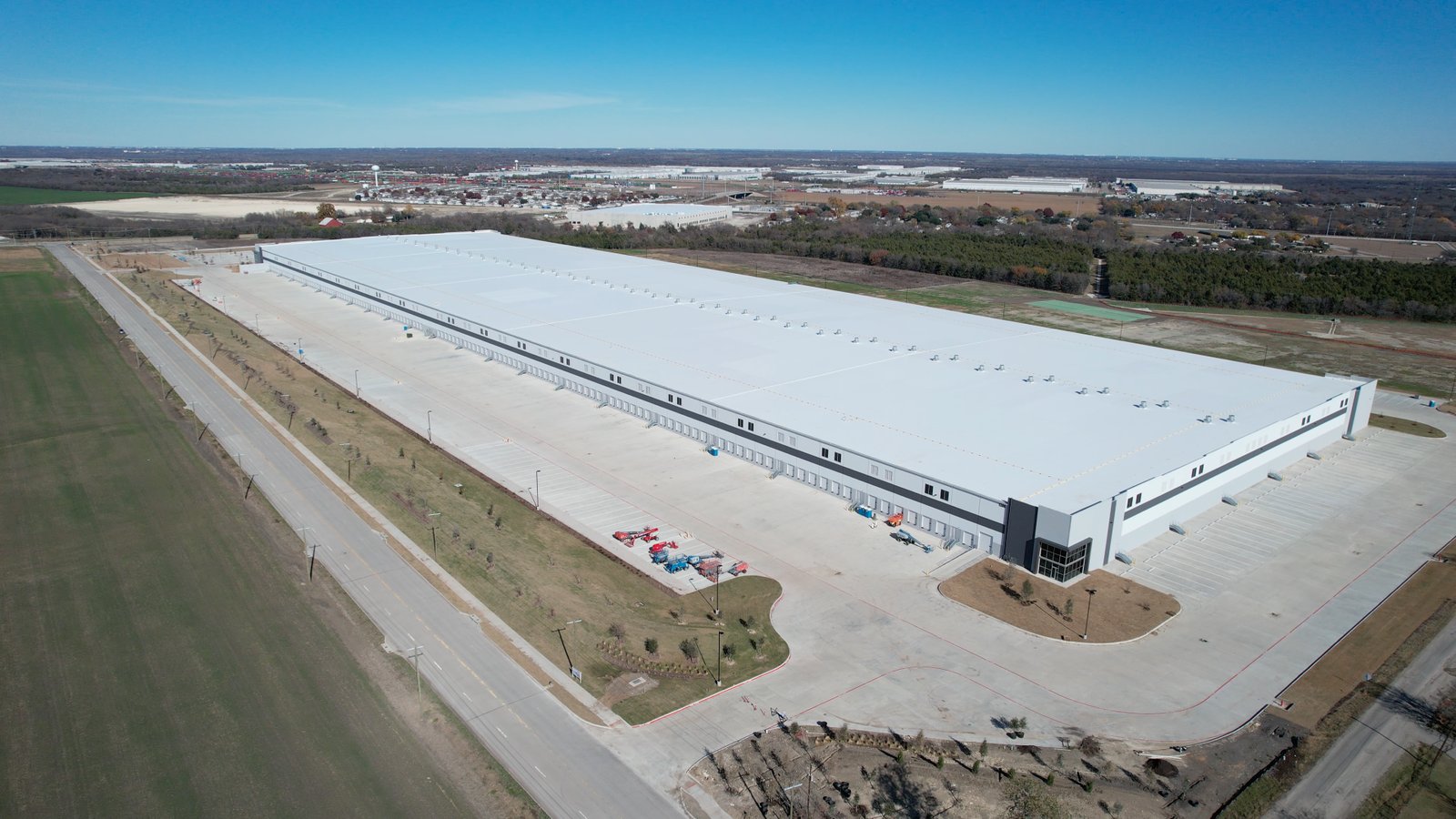
We build large distribution centers, transload buildings and cross-docks for owners who want the rail ramp within a short drayage and the interstates within a few minutes. In practice that means 400,000 to 1,000,000 square foot tilt-wall boxes with 36 to 40 feet of clear height, long truck courts, container-ready paving and enough trailer storage for a full week of peak volume. Where an owner plans for a rail spur to serve the building, we coordinate with the railroad on track geometry, clearances and the loading platform.
Because the area is often called the southern Dallas inland port, buyers expect a ready supply of large pads. The real work is making sure a particular pad can carry the building: utilities, drainage, soil, access and the permitting path in the specific city that holds the land. Our distribution center process starts with that screen, before an architect draws a column.
On large rail-area pads, the critical path often begins off-site. Water and sewer extensions, electric service from the utility, road improvements and drainage outfalls can take longer than the building. We request utility letters and capacity confirmation before design is complete, and we build their lead times into the schedule with a clear owner for each item.
Once utilities are on track, our sequence is mass grading, subgrade stabilization, footings, panel casting, erection, roofing, fire protection and paving. On million-square-foot buildings we run two or three crews in parallel and phase the slab pours so racking installers can begin early. Weekly lookaheads keep the owner and the tenant informed of every decision date.
The scope is bigger than the building. A rail-served distribution site includes tens of acres of paving, container staging areas, trailer parking, stormwater detention, lighting and security. We design pavement by the loads, using thick concrete in container stacking areas and landing zones and asphalt where it suits the traffic. Our truck court and trailer yard work spells out the details.
Inside the building, high-throughput users need many dock doors, wide column bays and strong floors. We build for conveyor lines, automated storage and manual racking alike. Where the tenant needs both a warehouse and a nearby chassis or trailer lot, we lay out the site so the two work together.
After Union Pacific chose Wilmer for its intermodal facility, reports say the city attracted Unilever, Procter & Gamble, Whirlpool and Medline. We mention those names only as a description of the kind of users drawn to the area, not as any claim about our own work. They show a cluster of household goods, appliance and medical-supply distribution, which shapes the neighborhood: heavy truck traffic, large buildings, and tenants who expect sophisticated logistics.
Lancaster, to the west, adds another set of facts. Its top employers in the 2024 annual financial report were Wal-Mart Stores (2,125), Lancaster ISD (915), DSV (450), Wayfair (401) and ThredUp (400), with Niagara Bottling at 350, and the Park 20/35 logistics business park is named in the same account. I-35E forms Lancaster's western boundary and I-20 serves the far north side. Lancaster Regional Airport is a city-owned general aviation reliever airport for DFW International and Dallas Love Field, two miles southeast of the central business district. For buyers who also weigh sites to the north, see Dallas and Mesquite.
Large buildings make site costs visible. Mass grading and imported fill, utility extensions, offsite road work, detention and heavy paving can together equal a large share of total project cost. We list each, include allowances where information is incomplete and refine the numbers as design and the geotechnical report advance.
A second cost question is flexibility. A single-tenant building for one user is cheaper per square foot than a demisable building, but it is harder to lease if the user leaves. Developers working with developers and REITs frequently ask us to price both layouts, with extra dock doors, separate utilities and demising walls as options. The differences are modest compared with the rent a more flexible building can command.
Million-square-foot sites bring their own hazards: long haul roads, many trades working simultaneously, multiple cranes and heavy equipment moving across wide distances. We plan separate pedestrian and vehicle routes, designate laydown areas and enforce speed limits. Cranes get lift plans, and tilt panel zones are closed to other work.
We keep a close watch on weather. Texas heat affects crews during summer pours, so we adjust hours, provide shade and water and monitor conditions. During storm season we secure materials, brace panels and have a plan to evacuate the site safely.
If the project touches railroad property or requires a spur, the railroad has its own review process, standards and timelines. We involve the owner's rail consultant early and coordinate design, contractor qualifications and construction windows. Even when no spur is planned, work close to a rail yard involves vibration, noise and safety considerations that we address in our plans.
For users wondering how a logistics park differs from a stand-alone site, see our work with 3PL operators, whose tenants often require rail adjacency but not rail service on site.
Send the parcel, the building size and your tenant requirements. We will review utilities, access and soil conditions and return a concept with schedule and budget.
Not necessarily. Many users prefer proximity and fast drayage to an on-site spur, which adds cost and railroad coordination. We price both options so you can compare.
It varies by utility and location, and can run longer than construction. We request letters and capacity confirmation early and carry the lead times in the schedule instead of guessing.
Concrete is common in stacking and landing areas because it resists the point loads, with asphalt on lighter lanes. We design from the equipment and a soils report.
The southern Dallas County area includes several cities, each with its own codes, review process and utility providers. We confirm the jurisdiction first and then the local requirements.
Yes. We design separate utilities, dock groups and demising points into the building, and price them as options so you can decide what to include.