Dock Equipment and Levelers
Category
Warehouse Construction Services
Service Area
Communities across Texas
Next Step
Request a Project Review
Category
Warehouse Construction Services
Service Area
Communities across Texas
Next Step
Request a Project Review
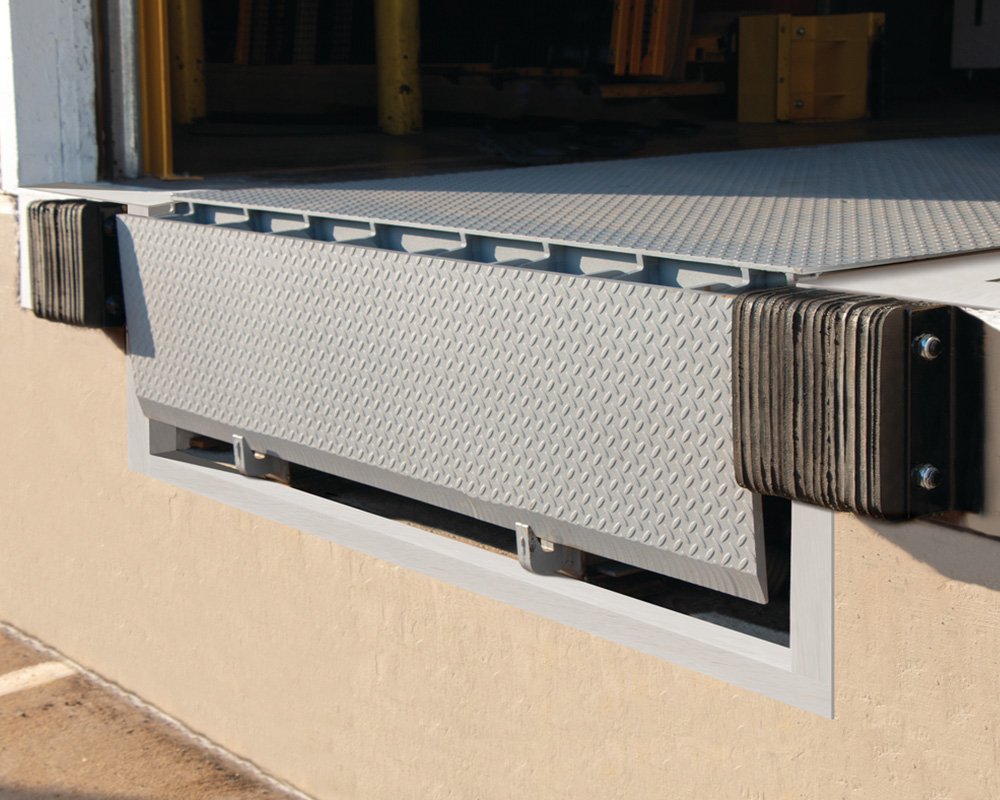
Every leveler pit is poured into the slab before the first pallet ever moves, which is why dock equipment is a construction decision first and a purchasing decision second. The pit depth, the curb angle, the embeds and the door opening all lock in when the concrete is placed, and swapping a mechanical leveler for a hydraulic one after the fact means cutting out a section of floor.
A dock position is a system: the door, the seal or shelter, the leveler, the bumpers, the vehicle restraint, the lights and the signals. Each part has a job. The leveler bridges the gap between dock floor and trailer bed, the restraint holds the trailer against the dock face, the seal keeps weather and pests out, and the signal tells the driver and the forklift operator when it is safe to load.
We specify, coordinate and install dock equipment as part of the building, and we do it early enough that the pits, the panels and the slab agree.
Edge-of-dock levelers are the lowest-cost option and suit light-duty loading. Mechanical pit levelers handle most standard warehouse traffic, and hydraulic levelers are the choice for heavy or high-cycle docks, with air-powered units in between. Capacity ratings run from the low tens of thousands of pounds up to much higher, and the right number depends on the lift truck weight with its load and the number of trips per hour.
Seals and shelters should be chosen for the trailer mix and the climate, and restraints for the dock safety program. Where the building mixes dry and refrigerated freight, we pair standard doors with insulated doors and vestibules, as in cold storage warehouse construction. We also tell owners which items are good places to save and which are not, since a cheap leveler on a busy door is an expensive repair.
Trailer separation and creep cause serious injuries at loading docks. A trailer that moves away from the dock face while a lift truck is loading it can drop the truck into the gap. Vehicle restraints, wheel chocks and light-and-signal systems are the controls, and we add them to the dock package as a routine part of the design instead of treating them as an upgrade.
We also plan lighting, wheel guards, bollards and pedestrian paths at the dock line. On buildings with high volumes, such as a cross-dock facility, this layout is as important as the equipment itself, because the dock line is where people and trucks are closest together.
A pit is a void in the slab. It needs reinforcement around the corners, a drain or sump where water could collect, and a waterproofing approach that suits the soil and groundwater. Where the water table is high, as in much of the Gulf Coast, we detail the pit to resist hydrostatic pressure and we slope the apron away from the building. Wet pits corrode levelers and are a common maintenance complaint.
Dock height is a design decision tied to the trailer fleet. Standard is about 48 inches, but operators who run containers on chassis, as in the busy Gulf port corridor, may want a different height. Houston's public terminals handled 4,303,345 TEUs in 2025, a reminder that container drayage influences dock design across the region, and our Port of Houston Bayport notes carry the same point. That terminal alone is described with 376 acres of container yard and a 123-acre intermodal facility, and warehouses built to serve it are designed around chassis, container lengths and the landing gear of heavy trailers. Dock aprons in those buildings are thicker, and the approach pavement is sloped for drainage so water does not run toward the doors.
Electrical coordination is the quiet part of the package. Levelers, restraints, door operators, dock lights and fans all draw power at the dock line, so we run conduit and disconnects in the slab and wall before panels go up. An owner who waits until after the building is closed to run those circuits pays for trenching through a finished floor.
An automotive parts distributor wants speed and durability, and its dock line will see heavy lift trucks all day, as the automotive parts distribution page explains. A parcel operator wants many doors and low-height positions for box trucks, covered under last-mile parcel hubs. A food operator wants sealed, hygienic positions that can be washed down.
Industrial parks that are served by rail and by barge, such as the 15,000-acre park in Baytown with 57 miles of dual-service rail track and two barge dock terminals, add another variation: rail doors, truck doors and sometimes a bulk transfer point under one roof. We detail each type to its own load, and we document the pit and embed locations on a dock schedule that the owner can hand to a future equipment vendor.
Developers who build on speculation often do not know the tenant's dock needs. The usual approach is to install the doors and levelers for a mid-range tenant and to stub the pits and electrical for more. Edinburg's economic development agency, for example, is working with developers on more than 600,000 square feet of speculative industrial space, and the buildings that lease fastest are the ones with flexible dock packages.
We help developers choose a dock ratio and a package that matches the target tenants. If the building is intended for Baytown industrial users, the package differs from a Valley small-bay building. We price an upgrade path, so a tenant can add equipment at its own cost without damaging the slab.
Send the door count, the trailer mix and the lift truck weights. We will return a dock package, pit details and pricing before the slab is designed.
Add the lift truck weight to the heaviest load it carries and look at the number of trips per hour. A typical warehouse runs 30,000 to 40,000 pound units, and heavier docks go to 60,000 or higher. We confirm against your equipment list.
Mechanical units are cheaper and simpler and suit many doors. Hydraulic units cost more, but they are smoother and more durable for busy docks. We recommend hydraulic units where cycle counts are high and maintenance access is limited.
For most operators, yes. They reduce the risk of trailer creep and early departure, and many insurers and safety programs expect them. We add them as a standard item in dock packages unless the owner asks otherwise.
Levelers need pits, so retrofits mean cutting the slab. Seals, bumpers and restraints can be added later, but it is far cheaper to rough in the electrical and pits at the start. We stub for future positions on spec buildings.