Truck Terminal and Cross-Dock Construction
Category
Building Types
Service Area
Communities across Texas
Next Step
Request a Project Review
Category
Building Types
Service Area
Communities across Texas
Next Step
Request a Project Review
Bridge capacity is the constraint that shapes every truck terminal built near the border. A city study reported in 2021 found that Laredo's World Trade Bridge could reach capacity by 2030, and planned widening would take it from eight lanes to 16, with a fifth international commercial bridge also proposed. When the crossing is the bottleneck, the terminal on either side of it has to hold, sort and release trailers with almost no slack, and the building and yard are designed to that rhythm.
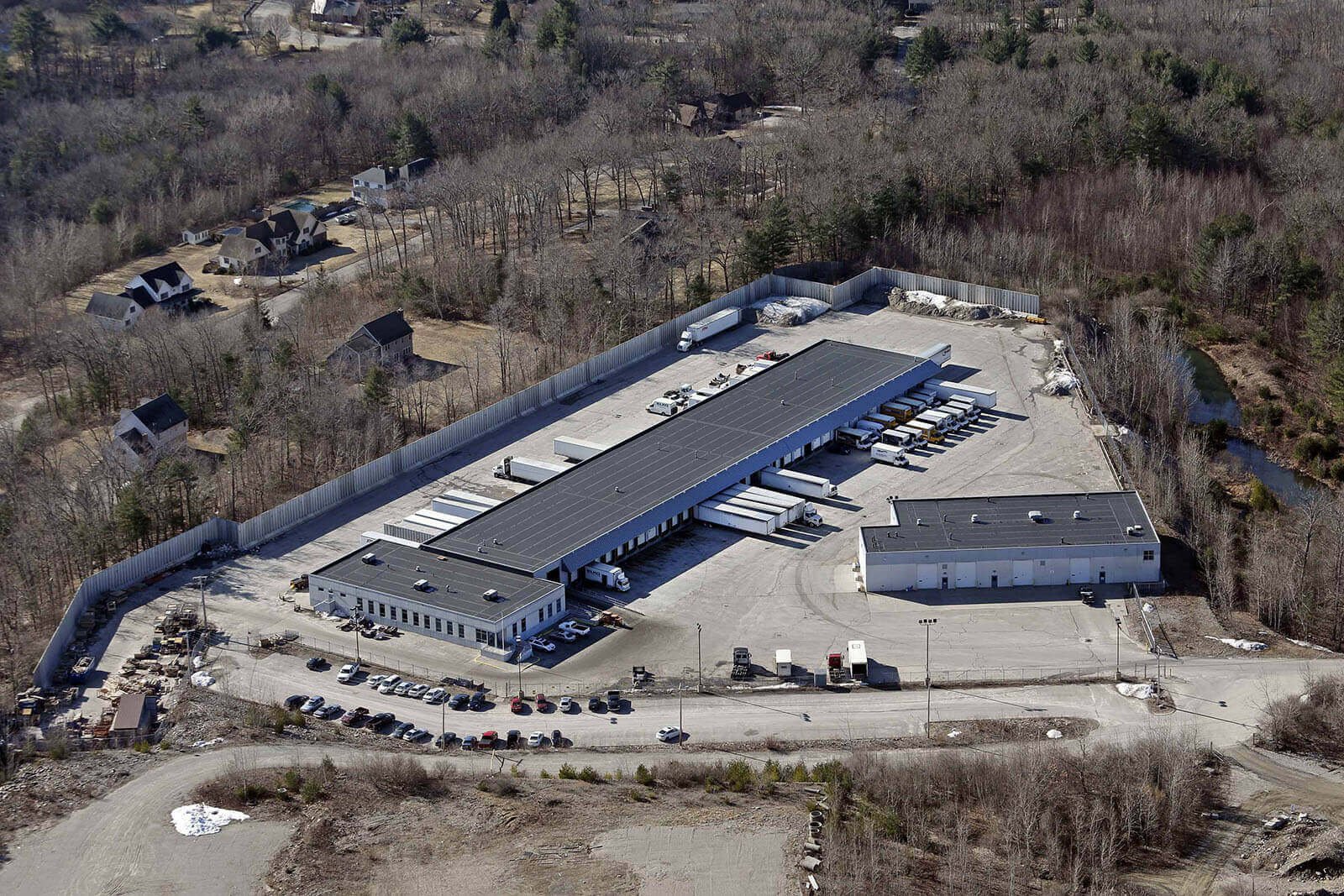
A truck terminal is a freight-handling facility more than a storage one. Trailers arrive, freight moves across a dock from one trailer to another or to a local delivery truck, and the trailers leave. The building is long and narrow, doors line one or both sides and the yard around it does as much work as the structure. The pavement, lighting, drainage, fueling, scale and security gates are all part of the project, and they often cost more than the building itself.
We build terminals for carriers, 3PL operators and developers who lease to them. A cross-dock for pallet or parcel freight is a close cousin and has a separate page, distribution centers are the storage-heavy version and our cross-dock facility service page covers the delivery method. What follows is how a terminal behaves in Texas's border, port and interstate markets.
The door line is the building. Terminal dock walls often carry a door every dozen feet or so, with the building depth set by how much freight must stage between trailers. A narrow building works for through-freight, but an LTL terminal that sorts by destination needs room for lanes of freight on the floor. We test the depth against the freight mix before the footprint is fixed, because changing it after the wall panels are cast is costly.
The yard sets the capacity. Trailer stalls, drop lots, tractor parking, fuel islands and a truck scale all compete for land. We design the pavement for concentrated trailer landing gear loads and for the turning of loaded tractors, which means thick reinforced concrete at the dock apron and at gates, and heavy-duty asphalt or concrete in the drop lot. The truck court and trailer yard crews we coordinate handle both.
Terminals run the hardest dock equipment in the industry. Levelers, bumpers, restraints and lighting are used all day, and a failure takes a door out of service. We specify heavy-duty levelers sized to the load and fit them into pits poured with the slab. The detail work is in our dock equipment and leveler page. Inside, high-bay LED lighting, lane markings and forklift charging are part of the electrical package.
Many terminals also include a small office, driver facilities and a maintenance bay. Those parts are conditioned, and they have a different cost per square foot from the dock. We separate them in the pricing so the owner can see the difference, and we place them so that truck traffic and pedestrians do not cross.
Border trade makes Texas terminals different from those in most states. About 14,000 commercial trucks cross each day between the World Trade Bridge and the Colombia Solidarity Bridge, according to the Laredo Economic Development Corporation, and 213,008 rail cars crossed through the Port of Laredo in 2025. Eagle Pass handled $3.77 billion in total trade in March 2026, which put it among the ten largest border crossings by trade volume that month, according to WorldCity data cited by FreightWaves.
Inland, the pressure is on interchanges. The Americas Interchange at Loop 375 and I-10 in El Paso is an eight direct-connector project, of which the second phase added three direct connectors in 2013, and a third phase remains awaiting funding. A terminal near an interchange that is still being built has to be designed with the road schedule in mind. Our pages for Laredo, Eagle Pass and Del Rio and El Paso describe the local freight environment.
A terminal has a lot of impervious area, and that creates a large stormwater requirement. Detention, water quality treatment and oil separation for fueling and wash areas are normal items. The state plan for flooding, built from 15 regional flood plans, is a reminder that drainage is a serious regulatory topic, and cities and counties set their own detention criteria.
Driveway permits are another approval item. A terminal generates truck movements that a state or county highway has to accept, and TxDOT or the local road authority may require turn lanes, signals or deceleration lanes. We submit driveway applications early because the review can take longer than building design. Fuel tanks, if included, bring state environmental rules and fire code review.
Terminals are dangerous places for people on foot. We separate pedestrian routes from trailer paths, add crosswalks, bollards and lighting, and use gates and cameras for security. Where a facility handles customs-bonded freight, cargo security requirements may add fencing, controlled access and monitoring. We build to the owner's security plan and coordinate with the integrator.
Inside, the dock line needs adequate lighting, ventilation for idling trucks and clear exits. Truck exhaust is a design concern at enclosed or semi-enclosed docks, and we work with the mechanical engineer on ventilation. Sprinkler design depends on what the terminal handles, and we confirm commodity class with the owner before the fire protection design begins. Operators in logistics and 3PL sometimes add temperature-sensitive freight, which changes the design again.
Send the door count you think you need, the routes you serve and the site. We will give you a layout concept, a yard plan and a schedule. Operators that expect to add e-commerce freight later may also look at our logistics fulfillment center page.
It depends on the number of routes, the trailers handled per shift and the mix of inbound and outbound freight. We work backward from the operating plan to a door count, then add spare doors for peaks and growth. Too few doors is the mistake that is hardest to fix.
Concrete lasts longer under trailer landing gear and standing loads, and it holds up against fuel and oil. Asphalt costs less at first and can serve drive lanes and overflow parking. Most terminals use concrete at the apron and gates and asphalt elsewhere.
Yes. Many are, especially near ports and rail yards. We can build to the lease term and design for removal or reuse of the major elements if needed.
It varies by agency and by the road. We start the application during design and track it as a critical-path item because turn lane requirements can change the site plan.
We build the shop and related slabs, drains and oil separators, and we coordinate fuel equipment with the specialty contractor. The fuel permit goes through separate state and local reviews, so we include it in the schedule from the beginning.