ESFR Fire Protection Coordination
Category
Warehouse Construction Services
Service Area
Communities across Texas
Next Step
Request a Project Review
Category
Warehouse Construction Services
Service Area
Communities across Texas
Next Step
Request a Project Review
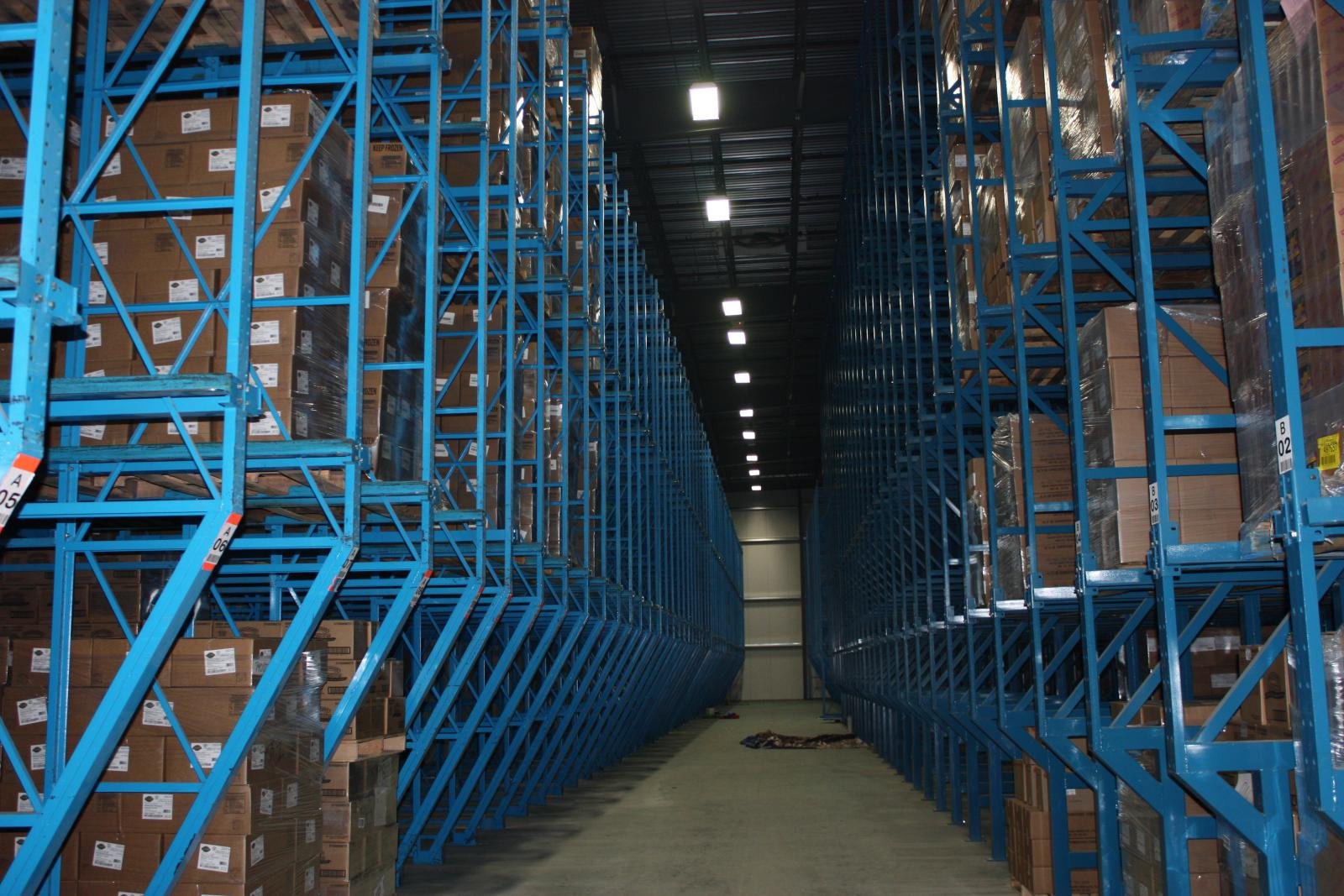
Thirty feet of clear height sounds like a leasing number, and it is also a fire protection number. The higher the storage, the more the sprinkler system has to do, and early suppression fast response heads, known as ESFR, are the design most owners choose for tall, rack-stored buildings because they are meant to suppress a fire at the ceiling instead of controlling it after it spreads. A Laredo warehouse listed with 30 feet of clear height and 118 dock doors is the sort of building where that choice comes up on day one.
ESFR is not a product you add at the end. It is a design with limits: ceiling height, storage height, commodity class, rack arrangement, obstructions below the deck and water supply all have to line up. A building that is designed for ESFR and then changed by a tenant who stacks plastics higher, or by a structural change that adds a beam below the heads, can fall outside its own listing.
We coordinate ESFR fire protection from the first column grid, so that the racking plan, the structure and the water supply agree before a pipe is hung.
The system depends on a few things working together. The water supply has to deliver flow and pressure at the remote heads for the design duration, which on a large building often means a fire pump and a storage tank. The ceiling must stay within the height limits of the listed heads. Obstructions, such as lights, ductwork or cable trays, must be kept clear of the spray pattern. And the storage below has to match the commodity and arrangement the design assumes.
That last item is the one that tends to change after turnover. A tenant takes the building and brings a different product mix, or builds the racks higher, and the original design no longer fits. We deliver a design basis sheet at turnover so the owner can see exactly what the system was built to protect, and we encourage owners to attach it to the lease. Inspection and maintenance matter too: heads that are painted, bumped by forklifts or hung with banners no longer perform as listed, so we add guard posts at the racks nearest the walls and give the operator a short maintenance list for the first year.
Texas sets the International Building Code as the municipal commercial baseline, and cities add local amendments by ordinance. Fire code is separate and is adopted locally as well. Dallas, for example, lists the International Fire Code with Dallas amendments, which means a sprinkler design in that city may be reviewed against requirements that a different jurisdiction does not impose.
That is why we sit down with the fire marshal and the building official before the design is complete. We ask which edition and amendments apply, how they handle high-piled storage, what water supply and fire pump rules exist and what the plan review and acceptance test process looks like. For buildings in Dallas and for San Antonio projects, where the Edwards Aquifer program adds its own review, we plan the schedule with all of those steps in view.
We bring the sprinkler contractor, the racking vendor, the structural engineer and the owner's insurer into a single design review. The sprinkler layout is checked against joist depth and bottom chord elevations. The riser room and the pump room are located so they open to the outside and sit near the water main. The underground fire line is routed with the site utilities package so the trench, the thrust blocks and the tap are done once.
For multi-tenant buildings, we plan risers and zone valves so one tenant's work does not shut down protection for another. And on rack-supported buildings, where the racks hold the roof, the coordination is tighter still, because the structure and the storage are the same system.
Fire protection touches the schedule in three places. The first is plan review, which can take weeks and needs a complete design. The second is the underground work, which must be finished and flushed before the slab is placed. The third is the final acceptance test, which needs a working water supply, a functioning pump and a witness from the fire marshal's office. If any one slips, the certificate of occupancy slips with it.
A site that falls in the Edwards Aquifer zone adds time. Texas requires a plan to be reviewed and approved under the aquifer protection program before building on the recharge, transition or contributing zones, and technical review of a complete application takes 90 days. We keep that clock in the schedule for any site that could be affected.
ESFR is tied to height. A high-bay crane-ready building may exceed the practical limit for ESFR heads, and then in-rack sprinklers or a different design are used. If an operator adds a second level for picking, our mezzanine and office build-out page explains how sprinklers get extended under and above the platform.
Manufacturers who store raw materials and finished goods, as in manufacturing distribution, often have mixed commodity classes in one building. We help them sort the building into zones that can be protected economically.
Send the racking plan, the clear height and the commodity list. We will coordinate the design among the engineer, the insurer and the fire marshal before the roof deck goes on.
No. It suits many rack-stored buildings with moderate ceiling heights and common commodities. Very high storage, certain plastics, flammable liquids and some rack configurations call for in-rack sprinklers or a different design. We ask for the commodity list at the start so the choice is made on facts.
Often, on large buildings, because ESFR demands more flow than city mains can supply in many places. A flow test at the site tells us what the water supply can deliver. If it falls short, a pump, a tank or both are added, and the room for them has to be planned early.
They can, but they should confirm that the new layout is within the design basis. Higher stacks, different commodities and added shelving can all change the requirement. We deliver a one-page design basis at turnover and recommend that owners keep it with the lease.
The state sets a baseline for building code, and cities adopt their own fire codes and amendments. Large metro areas often adopt newer editions. That is why we confirm the adopted edition with the local fire marshal for each project.
It can. Many insurers have their own protection standards for warehouses, and a compliant ESFR system helps with underwriting. We invite the insurer into the design review so there are no surprises at the end.